City Walls
Back to all places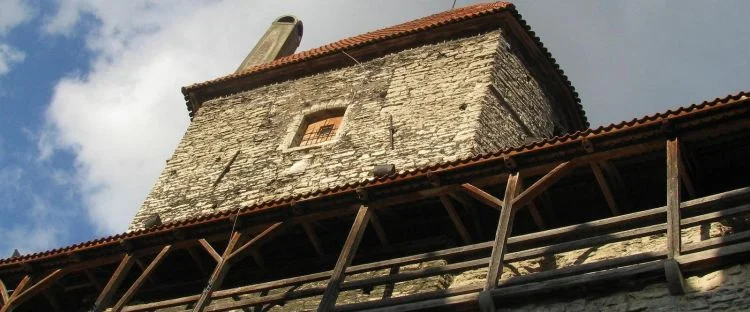
City Walls
0:00 / 1:47City Walls
Tallinn is one of the few cities which may boast of a more or less well-preserved system of medieval fortifications. The total length of the wall was almost 2.4 km, out of which about 1.2 km is preserved. Along the walls 27 mural towers and 8 gate towers were distributed. This system was erected between 13th and 16th centuries. The oldest part of the fortifications is the southern.The first wall around Tallinn known as Margaret’s wall was ordered to be constructed by Danish queen Margaret in 1265. It was considerably enlarged and strengthened in the following centuries. The citizens of Tallinn were required to turn out for guard duty, which meant they had to wear their armour and demonstrate their readiness to face off invaders. From the 17th century when the wall had lost its strategic importance it started to be filled with houses, sheds and workshops. Alot of them were demolished during the Soviet period which resulted in the wall starting to crumble. It should be noted that Tallinn had not yet been not declared a UNESCO heritage site at the time and the ideas about restauration and conservation were quite different in the USSR. Consequently a part of the wall is supported by concrete buttresses or counterforts. A portion of the wall can be accessed from the Hellemanni Tower.
The Hellemanni Tower had a unique base room without an entrance. This was most likely probably built to deter humidity. The unstable soil has continued to be an issue to this day. In the 1980s, the tower was connected to a building on the other side of the wall, on Uus Street. A defensive passage up on the wall was built from Hellemanni Tower to the Viru gate. LAter the passage has been also extended to the other side of the tower and it is possible to go from here directly to the Tower Behind the Monks.
59.43727, 24.74937