Niguliste
Back to all places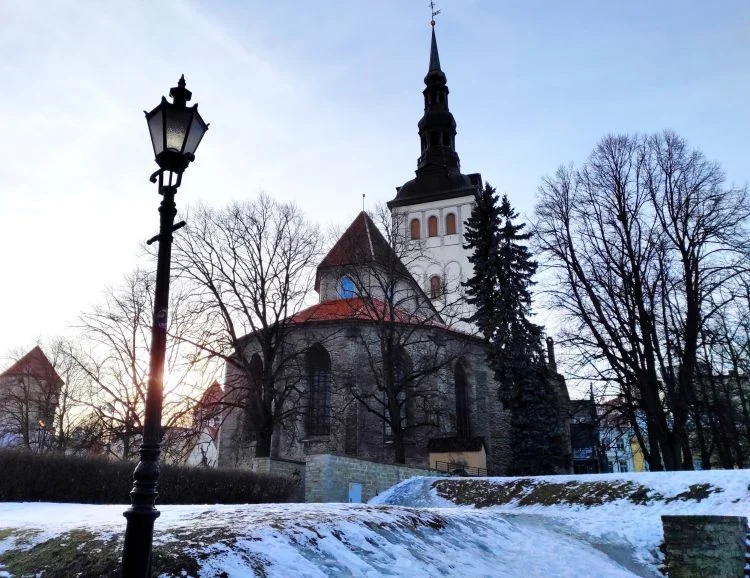
Niguliste
0:00 / 1:47Niguliste
The Niguliste or Saint Nicholas’ Church was one of the two parish churches in medieval Tallinn and one of the wealthiest churches in the town. Consecrated to St. Nicholas, the patron saint of merchants and seafarers, it is believed to have been founded in the middle of the 13th century. The first written mention of the Church of Saint Nicholas or Niguliste occurs in 1316. The tower in its upper part was built in baroque style the late 17th century, replacing a conical tower which had collapsed. Unlike all other churches of the Lower City, the Church of St. Nicholas was spared by the iconoclasts. A warden of the church secured the locks by pouring molten lead into them. There are several baroque memorial chapels next to the main entrance. Out of these, the Clodt Chapel, on the left, was the object of an impious curiosity until the end of 19th century. This Chapel is the final resting-place of Charles-Eugène, Duke of Croy, who commanded the Russian army defeated at Narva by Charles XII. When he died a prisoner in 1702 he had contracted a certain amount of debts. He was refused a burial, as nobody was prepared to defray the expenses. His exposed body under the action of the air in the church soon became mummy and no visitors ever failed to inspect this curiosity. He was finally buried a few years before his bicentenary in the mummified state.
During the bombing of Tallinn during World War II, the church was hit and almost everything that was left in the building was destroyed by fire. Only a few of the churches valuable art works were saved from the destruction of the war. The building was reopened as a branch of the Art Museum of Estonia and a concert hall in the 80s, after nearly thirty years of restoration.
59.43605, 24.74264