Toompea Castle
Back to all places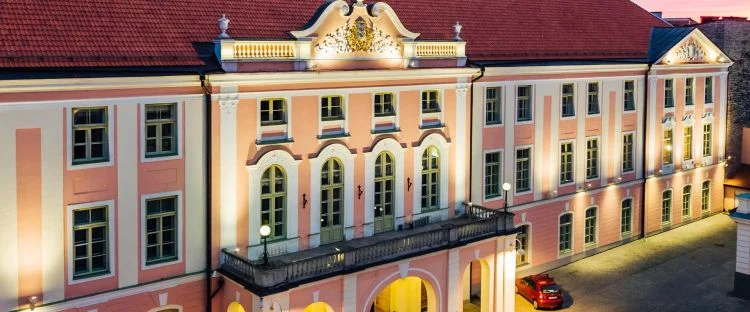
Toompea Castle
0:00 / 2:30Toompea Castle
Toompea Hill has been the centre of power in Estonia for 800 years. The building of the castle began soon after the German and Danish crusaders occupied the land in the early 13th century. Today the Riigikogu or parliament of the Republic of Estonia works here. Over centuries the order masters of the Livonian Order, vice-regents of Denmark, governors of Sweden and Russia and German and Soviet occupation authorities have ruled over Estonia from this place. The palace complex of Toompea consists of parts that date from different periods. The oldest is the western wall and towers of the medieval order castle. During the Medieval period, the Castle had four towers. Over time one of them has been demolished while the remaining three have been modernised together with the rest of the complex. The tallest and most famous is the Tall Hermann. The elegant baroque facade is part of the Province government building constructed by the order of the Russian Empress Catherine II in late 18th century. The new building resembled a nobleman’s palace and became known as the Toompea Palace. In the centre of the facade there is the great state coat of arms of the Republic of Estonia. It features three blue lions on a golden shield. On both sides, and at the bottom, the shield is framed by two golden oak branches that cross at the base of the shield. The central motif originates from the coats of arms granted by Valdemar II, King of Denmark, after founding the Duchy of Estonia during the Northern Crusades. The Session Hall of the Riigikogu is located in a building built on medieval foundations around the inner courtyard of the castle in early 1920s. Altogether over 350 people work here daily, including the 101 members of the Riigikogu and about 250 officials of the Chancellery of the Riigikogu.
The ghosts of the castle are said to be mostly related to the prison once present here. The are often seen in the form of fire and flashes, as there was a lot of torturing used in those times. On the other hand it is possible that the ghosts have taken inspiration from the bubbling personalities of some of the more hot-headed people working here today.
Other unexplained fenomena of the castle are the steps heard and the door handles moving. On inspection, no one could be seen. Men have been seen standing behind doors who suddenly disappear, but then again, this also could perhaps be expained by the busy schedule of the parliament members that often makes them dissappear just before entering the session hall.
59.43540, 24.73802