Town Hall
Back to all places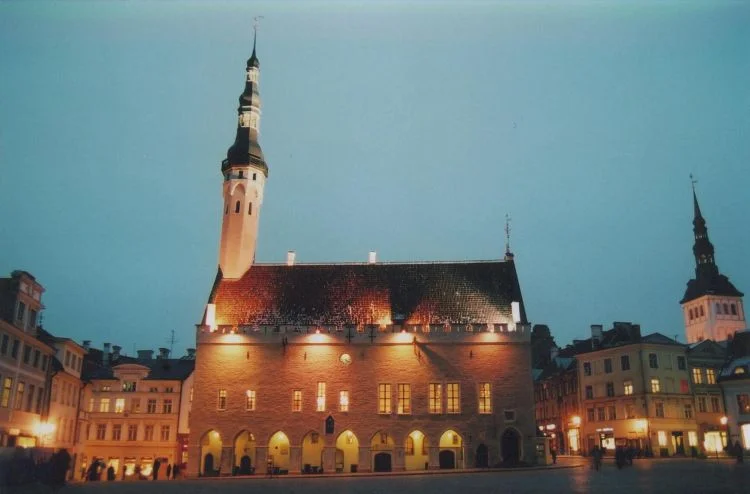
Town Hall
0:00 / 2:31Town Hall
Raekoda or Town Hall is one of the most interesting medieval buildings in Tallinn. This building is the oldest town hall in the whole of the Baltic region and Scandinavia mentioned as early as 1322. The actual facade dates back to 1404. Its narrow hectagonal 64 meters tall tower, with a Renaissance helmet and a unique weather vane known as the Old Thomas on the top, is of a later origin, having been added in the 17th century. On the main floor there were three most important offices and representational spaces, starting from the tower: town hall writer’s room, single-nave town hall room, which was the hall meetings room for the town council, and a two-nave citizens hall often used for public events like theatre or concerts. One of the main features of the building is the gallery along the ground floor. One of the pillars of the arcade-gear of the town hall was used as a pillory complete with a neck rail and manacles. Criminals were chained to it to display them to the townspeople for some healthy mocking and dishonoring intended to help them on their way to repentance. The facade is decorated by two dragonhead-shaped gargoyles. On top of the facade, the national flag together with the flag of Tallinn can be seen. The city power worked in the Town Hall until 1970. It has been restored and is nowadays open to visitors as a concert venue and a museum.
During the Middle Ages the town was governed by the Town Council elected from the most influential and richest residents, mostly merchants. Being a representative in the Town Council was a position of honour so at first only half, called the sitting Town Council, dealt with town matters. Tthe other half or the old Town Council needed a year off to deal with their businesses. After a year the roles changed.
From the mid-15th century till the end of its existence, the Town Council comprised of 4 burgermeisters, 14 representatives of the Town Council and 1 town lawyer now working on permanent basis, not in shifts. Merchants and representatives of the most profitable crafts were mostly Germans, generally from Westfahl and Rheinland, and at least half of the townsfolk were Estonian. Tallinn needed working hands so peasants who were serfs to the landlords often escaped and migrated to town. This lead to conflicts between the town and the landlords of the nearby areas. In late middle ages the population of Tallinn was about 6000 to 7000 people.
59.43708, 24.74532